Please Call Before Collecting
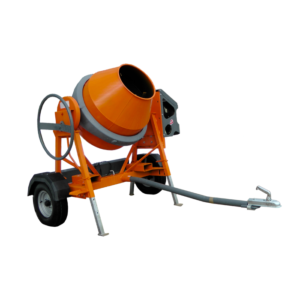
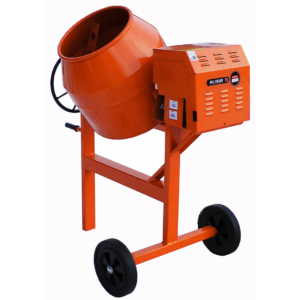
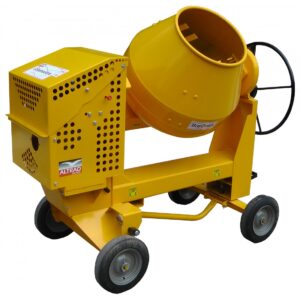
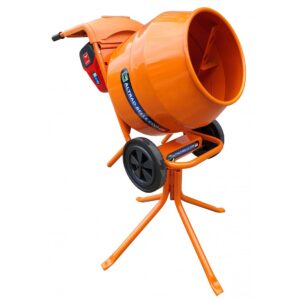
Petrol and electric mixers for concrete, mortar, render and screed — sized for everything from a weekend patio to a full site pour.


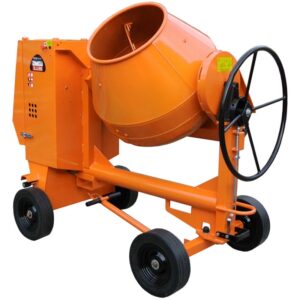
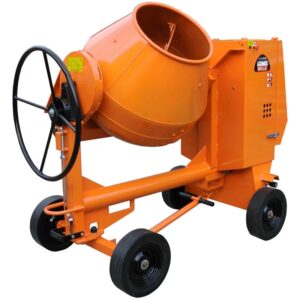
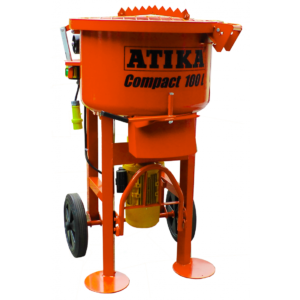
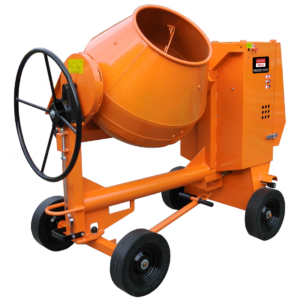
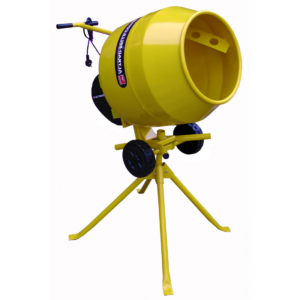
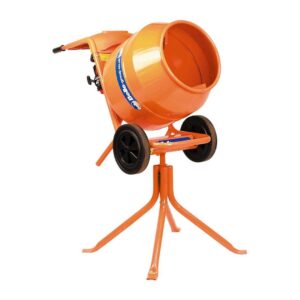
Mixing by hand gets old fast, and it never gives you a consistent batch. A cement mixer does the hard work for you, blending sand, cement, aggregate and water evenly every time, so your mix is the same in barrow four as it was in barrow one. Below you’ll find our full range, from compact electric mixers for smaller domestic jobs to heavy-duty petrol site mixers that can run all day.
Not every job needs the same mixer and buying too big or too small either slows you down or wastes fuel and space on site. Here’s what actually matters when you’re picking one.
Drum capacity. Smaller mixers (around 90–110 litres) suit fence posts, small patios, garden walls and repair jobs where you’re mixing little and often. Mid-size mixers (around 140–150 litres) are the standard choice for most trade work, extensions, driveways, footings and general block laying. If you’re pouring large footings or working continuously through the day, a bigger drum means fewer stops to reload.
Petrol or electric. Electric mixers are quieter, easier to run indoors or in built-up areas, and there’s no fuel to think about, good for domestic jobs and sites with power on hand. Petrol mixers go anywhere, including sites with no power supply, and tend to be the go-to for tradespeople working across multiple locations.
Portability. If the mixer needs to move around the site or between jobs, look at the wheel size and frame design. A mixer that’s easy to wheel over rough ground saves a lot of hassle at the end of a long day.
Build quality. A mixer that sees regular use needs a solid drum, a reliable motor or engine, and gearing that won’t strip out under load. It’s worth paying for something built to last rather than replacing a budget mixer every season.

A successful site hoarding installation relies on selecting the right combination of components for your project.
Hoarding panels form the main perimeter and provide the solid barrier that distinguishes hoarding from traditional temporary fencing. Depending on the size and layout of the site, panels can be configured to create secure boundaries around work areas, compounds and storage zones.
Access points can be created using pedestrian gates and vehicle gates, allowing controlled entry for workers, visitors, deliveries and plant machinery without compromising security.
Fence feet, stabilising bars and support systems help ensure the hoarding remains secure and stable throughout the duration of the project. These components are particularly important on larger installations or sites exposed to higher wind loads.
Couplers and fixing accessories connect individual panels to create a continuous perimeter while allowing systems to be installed, modified and dismantled efficiently as project requirements change.
By selecting compatible components, contractors can create a hoarding system that is tailored to the specific demands of the site while maintaining safety, security and ease of installation.
One of the most common questions contractors ask is whether site hoarding or temporary fencing is the best solution for their project.
Temporary mesh fencing is often chosen for short-term projects where visibility through the fence line is not a concern. It provides a quick and cost-effective method of securing a site perimeter while maintaining visibility.
Site hoarding, however, offers a higher level of privacy and a more professional appearance. The solid panel design helps conceal site activities, equipment and materials while creating a stronger visual barrier between the public and active construction works.
For projects located in town centres, residential developments, retail environments or high-profile construction sites, site hoarding is often the preferred choice due to its enhanced security, privacy and presentation benefits.
A good cement mixer isn’t just for concrete. Used properly, one machine will handle:
Load order matters for a consistent mix, most trades add roughly half the water first, then the dry materials, then top up the water and let the drum do the rest.
For most driveways, a mid-size mixer (around 140–150 litres) strikes the right balance, big enough to keep pace with the job, small enough to stay manageable on site.
It depends on where you’re working. Electric suits domestic jobs with power close by. Petrol suits sites without a power supply, or where you need to move between locations during the day.
No formal training is required for a standard site mixer but always read the manufacturer’s instructions before first use and follow basic safety practices, such as stable ground, guards fitted, and never reaching into a moving drum.
Run water and a few pieces of aggregate or rubble in the drum for a couple of minutes to knock off wet residue, then rinse thoroughly. Never let concrete dry inside the drum, it’s far harder to remove once set.
All cement mixers come with a manufacturer’s warranty of 12 months.
Most full drum loads mix thoroughly in around 2–3 minutes once everything’s in though it depends on the mix (wetter mortar mixes faster than stiffer concrete) and how full the drum is. Running it too briefly is the most common cause of an uneven mix, so it’s worth letting it turn a little longer than feels necessary.
Whatever the job, the right mixer saves you time, effort and a sore back. Browse the range above or get in touch if you’re not sure which size suits your project, we’re happy to talk it through.