Please Call Before Collecting
£3,085.00 – £4,065.00Price range: £3,085.00 through £4,065.00 ex. VAT
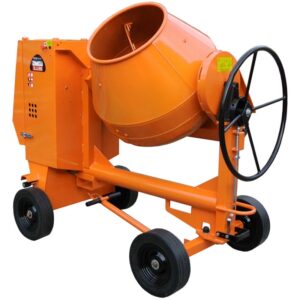
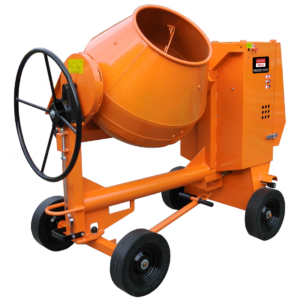
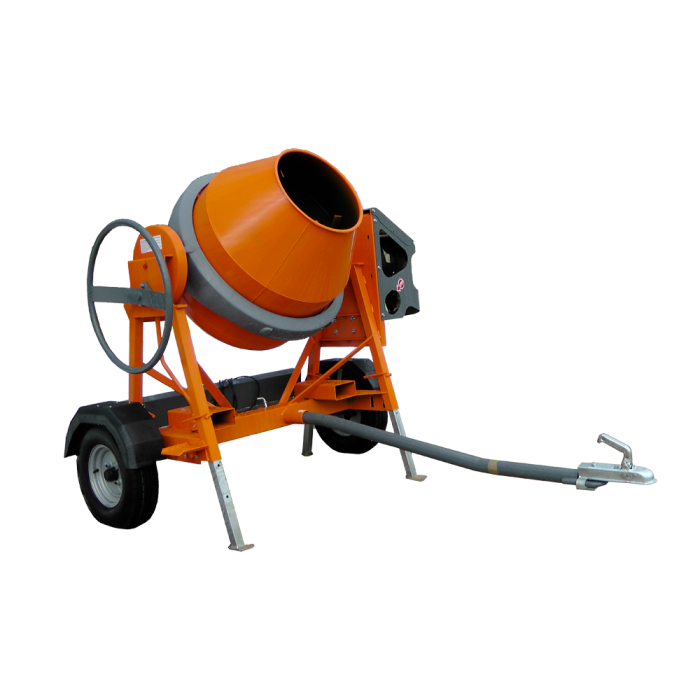
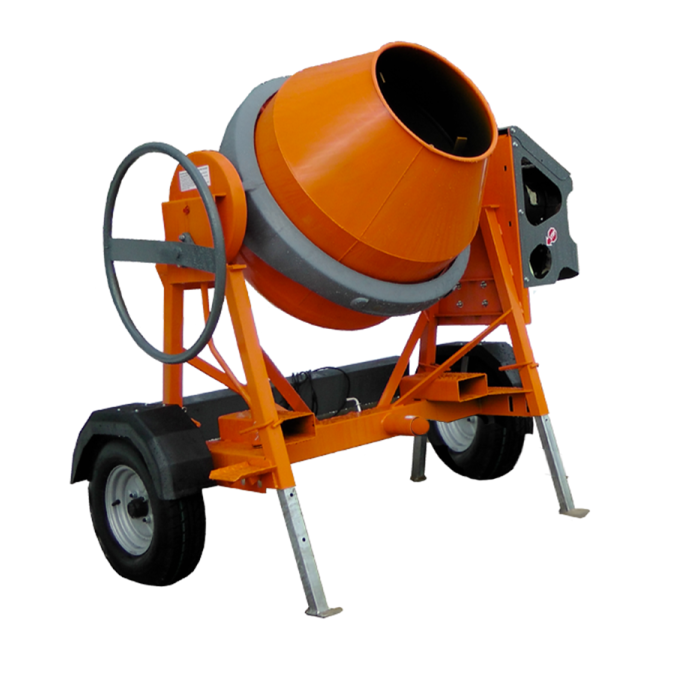
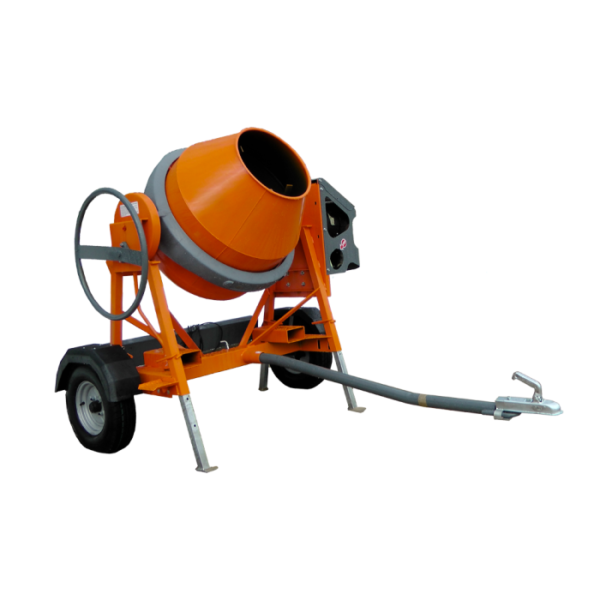
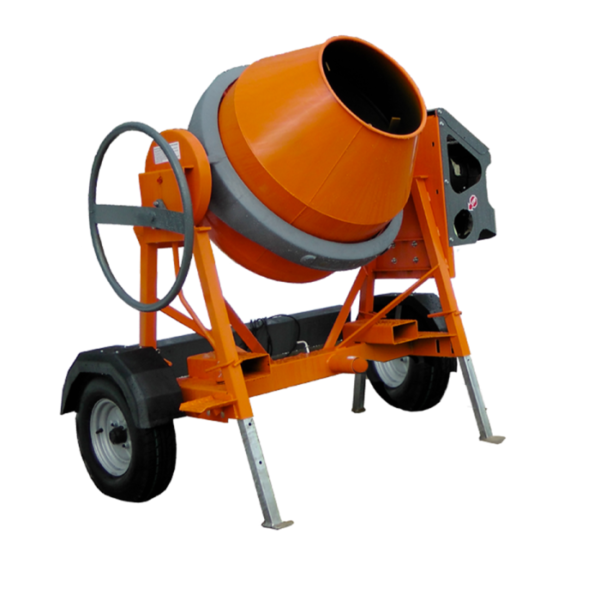
The Belle AT350 Road Tow Concrete Mixer is a professional heavy-duty site mixer designed for builders, contractors, groundwork teams and hire companies needing reliable high-volume concrete and mortar mixing.
Featuring a large 340-litre drum with a 280-litre mixing capacity, the Belle AT350 is ideal for demanding construction projects where durability, portability and consistent performance are essential.
Available in electric, petrol and diesel models, the AT350 is designed for professional site use and can be easily transported between jobs thanks to its robust road tow chassis.
Most site mixers ask you to choose between capacity and portability. The AT350 doesn’t make you pick. It’s built around a proper 340-litre drum, big enough to keep a groundworks team supplied without constant batching, but the whole unit sits on a fast-tow chassis that hitches up and travels between sites at speeds up to 55mph. For contractors juggling several jobs a week, that combination is the whole point of buying this machine over a static mixer.
Inside the drum, three gated paddles do the actual mixing work, folding concrete and mortar through evenly rather than just spinning it around. A large side handwheel with a foot-pedal lock gives you controlled tipping when it’s time to pour, and the 500mm pneumatic tyres mean it doesn’t get stuck the moment the ground turns soft.
This isn’t a mixer designed for the occasional weekend job. The chassis, drum and gearbox are all specified for daily professional use, the kind of use where a mixer might run for eight hours, get towed to another site, and do the same again the next day. Forklift pockets and a central lifting eye mean it can be moved on and off wagons without drama, and adjustable support legs let you level it out on uneven ground rather than fighting a lopsided drum all day.
The AT350 comes in three versions, and which one suits you usually comes down to what power is available on site rather than personal preference.
Electric (230V) — Runs from a standard 16A supply. Quieter and lower-maintenance than the engine-driven versions, so it’s the natural choice for sites with mains power, indoor work, or anywhere noise restrictions apply.
Honda Petrol (GX160) — No power supply needed. The GX160 is one of the most widely used small engines in the trade, which also makes servicing and parts easy to source almost anywhere in the UK.
Hatz Diesel (1B20) — Built for sites that run mixers hard, all day, every day. Diesel typically works out cheaper to run over long hours and suits contractors who’d rather not think about fuel twice a week.
If you’re not sure which one fits your site, it’s worth a quick call before you order. The wrong power source is the most common reason mixers get returned or swapped.
This mixer tends to suit jobs where a small mixer would slow the team down, but a static plant mixer is overkill. That covers:
| Specification | Detail |
| Brand | Altrad Belle |
| Model | AT350 Road Tow Mixer |
| Drum capacity | 340 litres |
| Mixing (yield) capacity | 280 litres |
| Paddle system | 3 gated paddles |
| Tyres | 500mm pneumatic |
| Max towing speed | 55mph (road legal) |
| Overall dimensions (approx.) | 950mm (L) x 1910mm (W) x 1630mm (H)* |
| Weight | 320kg (electric) / 323kg (petrol) / 337kg (diesel), approx. |
| Handling features | Forklift pockets, central lifting eye |
| Discharge | Side handwheel with foot-pedal locking |
| Applications | Concrete and mortar |
| Model | Power Unit | Output | Best For |
| Electric | 230V single-phase motor | 1.5kW / 2.0hp | Mains-powered sites, noise-sensitive or indoor work |
| Petrol | Honda GX160 | 4.0kW / 5.5hp | Remote sites with no mains power |
| Diesel | Hatz 1B20 | 3.5kW / 4.8hp | Heavy daily use, longer running hours |
The AT350 is delivered on specialist transport due to its size and weight, with delivery typically taking 2–5 working days. Click & collect is available from our Aldingbourne, West Sussex site. Please call ahead before collecting so we can have it ready.
No. The 230V electric AT350 runs from a standard single-phase supply via a 16A connection, the same as you’d find on most site power boards.
Yes, most operators manage this alone. The ball hitch coupling makes towing straightforward, and the transition from tow mode to mixing mode is designed to take only a few minutes without extra tools.
It couples via a standard ball hitch, so any tow vehicle with a compatible towbar and sufficient towing capacity for the model’s weight (see the specification table above) will do. Check your vehicle’s braked/unbraked towing limit against the mixer’s weight before towing.
Yes, it’s supplied with an integrated lighting board and mudguards fitted as standard, so it’s ready for road use straight away.
Via a large side-mounted handwheel paired with a foot-pedal lock, which holds the drum in position during loading and releases it for a controlled pour when you’re ready.
Routine maintenance (drum cleaning, checking paddles and belts, greasing moving parts) can be done on site by most operators. Engine or motor servicing follows the standard schedule for whichever power unit you choose, Honda, Hatz or the electric motor.
It’s built for site conditions, and the engine/motor is protected by a ventilated canopy, but as with any powered equipment, covering it or storing it undercover when not in use will extend its working life.
| Mixer Type | AT350 – 230v Electric (UK35P1E01), AT350 – Honda Petrol (UK35P1V09), AT350 – Diesel (UK35P1A10) |
|---|