
Please Call Before Collecting
High-quality corrugated metal sheets • Strong and durable steel construction • Ideal for roofing, cladding, agricultural buildings, workshops, garages, sheds & industrial projects • Weather-resistant and long-lasting finish • Quick and easy to install • Suitable for both domestic and commercial applications.
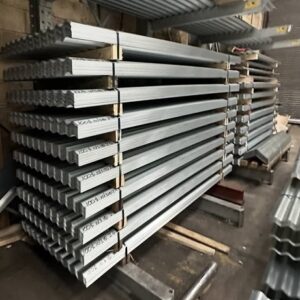
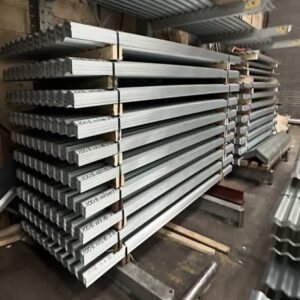
Corrugated metal sheeting has been roofing British barns, sheds and outbuildings for well over a century, and it hasn’t really been beaten on value. The corrugated profile has a 3-inch wave pattern, and this does two jobs at once: it stiffens what would otherwise be a flimsy sheet of metal, and it channels rainwater straight off the roof instead of letting it pool. That’s the whole reason it’s lasted this long as a building material.
Our range covers:
Whether you’re patching an old barn roof or building a shed from scratch, this is the same material that’s been used on agricultural buildings, garages, warehouses and temporary roofs for decades.
Galvanised steel that resists rust. The sheets are hot-dip galvanised, meaning they’re coated in zinc that protects the steel underneath. Even if a sheet gets scratched or cut on site, the zinc coating “self-heals” around the damage to a degree, which is part of why this stuff has a real lifespan of 20-40+ years rather than rusting through in a decade.
Lightweight, but it doesn’t feel cheap. One person can carry and fix a sheet without machinery. That keeps labour costs down and means it’s genuinely DIY-friendly, not just marketed as such.
Built-in drainage. The corrugations aren’t decorative; they’re the drainage system. Water runs down the grooves to the eaves instead of sitting on a flat surface, which is the main reason corrugated roofs don’t leak if they’re fitted correctly (fixed at the crest of the wave, not the trough, more on that below).
Cost-effective for the coverage you get. Compared to tiled or felted roofing, you’re covering a lot of roof area per pound spent, which is why it’s the default choice for agricultural and outbuilding roofing across the UK.
Corrugated metal sheeting turns up on:
We currently stock corrugated sheets in:
8ft sheets — suited to smaller structures: sheds, lean-tos, garden buildings, or anywhere you’re roofing in a single run without needing to overlap lengthways.
10ft sheets — better for larger spans like garages, workshops and agricultural buildings, where fewer joins mean a faster, tighter install.
A quick note on measuring: the overall length of a sheet (e.g. 8ft) isn’t the same as the covered length once it’s overlapped with the next sheet, overlapping eats up roughly 2 inches per join. Measure your roof first, then order the longest run to keep cuts to a minimum.
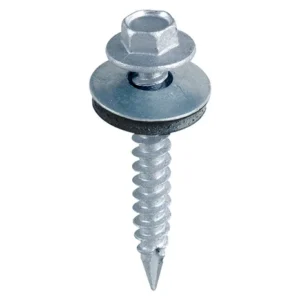
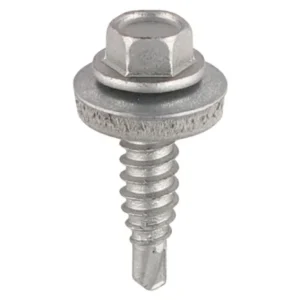
A corrugated roof is only as good as what’s holding it down. We stock two types of Tek screw to match the two places you’ll be driving them:
Sheet-to-sheet screws Are used where two sheets overlap each other, side-laps and end-laps. These typically have a shorter point and are designed to bite cleanly through two layers of thin steel without it spinning or wandering.
Sheet-to-timber screws Used to fix the sheet down into the timber purlins underneath. These have a coarser thread designed to grip wood, plus a self-drilling tip so you’re not pre-drilling every hole by hand.
Both come with a bonded rubber (EPDM) washer under the head; this is what seals the hole, not the screw itself. A washer that’s compressed evenly will keep water out for years; one that’s overtightened will dimple the metal and crack, which is a common cause of “mystery” roof leaks years down the line.
Rule of thumb: fix into the crest (the top of the wave), never the trough. Screwing into the trough puts the hole exactly where water collects.
It’s possible, but not advisable. The sheets can flex and dent underweight, and there’s an obvious fall risk on any pitched roof. If you do need access, stick to the purlin lines near the crests rather than open spans, and never in wet or windy conditions.
Not really, despite the reputation. The sheets themselves don’t resonate much, but an uninsulated structure underneath, a bare barn or shed with nothing between the roof and the inside, will let more sound through. Insulation or a ceiling layer solves this.
It reflects more heat than it absorbs, which generally keeps a building cooler in summer than darker roofing materials would. In winter, it offers no real insulation value on its own, so most people pair it with insulation underneath if the building is used year-round.
Yes. An acrylic or acrylic-latex paint with UV resistance works well over galvanised steel, and it’s a common way to extend the life of an older roof or match a building’s colour scheme.
It’s not essential for a basic shed or outbuilding, but it’s worth adding on anything you want to keep dry inside, a workshop, stable, or storage building. A breathable membrane under the sheets cuts down on condensation dripping back through on cold mornings.
The overall length is the full physical size of the sheet, end to end. The covered length is what you actually gain on the roof once it’s overlapped with the next sheet, roughly 2 inches less than the overall length per join. Always measure your roof and work backwards from the covered length when working out how many sheets to order.
Yes, with tin snips, a nibbler, or an angle grinder fitted with a metal-cutting disc. Cut on the ground rather than on the roof where possible and treat any exposed cut edges with a zinc-rich spray to stop rust starting at the cut line.
Whether it’s a quick repair or a full re-roof, we can sort the sheets and screws together so you’re not making two separate orders. Get in touch if you need help working out quantities, or if you’re ordering in bulk for a trade job, discounts available on larger orders.