
Please Call Before Collecting
£3.00 ex. VAT
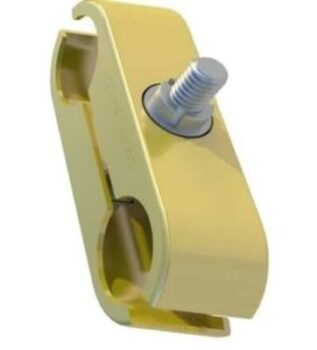
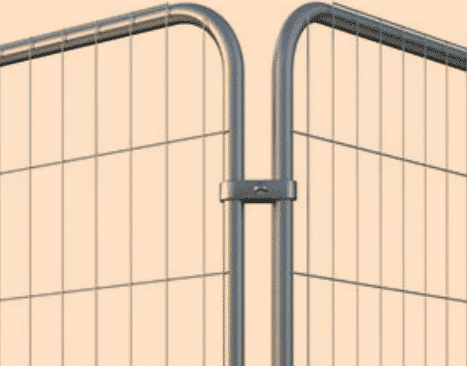
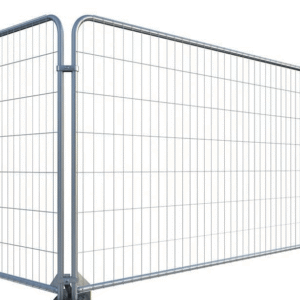
Heras fence anti-tamper couplers lock adjoining temporary fence panels together so they can’t be pulled apart by hand. Made from hot-dip galvanised steel for full weather resistance, each coupler weighs around 0.44kg and secures with a 7/16″ BSW bolt that can only be tightened or released using a dedicated anti-tamper security spanner. They clamp around the outer frame tubes of standard Heras panels and are fully reusable. Ideal for construction sites, events, hoarding and any perimeter where panel security genuinely matters. Spanner sold separately.
Anti-tamper Heras fencing couplers are used to add an extra layer of security to temporary fencing and hoarding systems by connecting panels, gates, and stabilisers, which helps prevent vandalism, unauthorised access, theft, and break-ins as they feature a security nut and once locked in place it cannot be undone; it is virtually impossible to prise, loosen or break the coupler as only an anti-tamper spanner can undo these security clips.
The anti-tamper coupler is made from electro-galvanised carbon steel, measures approximately 75mm in width, 35mm in thickness, and 140mm in length, and weighs around 0.4kg. They are often seen holding perimeter fences together on construction sites, highways, city streets, at events, and at outdoor gatherings, as they are ideal for high-security locations.
A run of temporary fencing is only as secure as the joints holding it together. Standard couplers can be loosened by hand or with a basic spanner, which means an unsecured site can be opened in seconds, by trespassers, opportunists, or simply by panels working loose in the wind.
Anti-tamper couplers close that gap. The fixing bolt sits recessed and shaped so an ordinary spanner won’t grip it; only the matching anti-tamper security spanner can turn it. Once tightened, the coupler can’t be prised, knocked or unwound off the tube. The result is a fence line that stays where you put it until you decide to take it down.
They fit the same way as a normal coupler, so there’s no learning curve for your crew, the only difference is the tool in their hand.
| Specification | Detail |
| Material | Hot-dip galvanised steel |
| Finish | Zinc-coated, corrosion-resistant |
| Weight | Approx. 0.44kg per coupler |
| Fixing bolt | 7/16″ BSW |
| Fitting tool | Anti-tamper security spanner (sold separately) |
| Compatibility | Standard Heras / temporary fence panel tubes |
| Components | Two clamp halves, nut and bolt |
| Reusable | Yes |
| Weather resistant | Yes |
Anywhere a temporary perimeter needs to hold its line for more than a few hours:
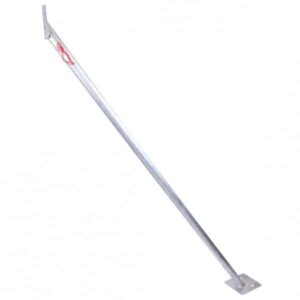
For a stable run, pair couplers with fence feet and stabiliser braces at the appropriate intervals.
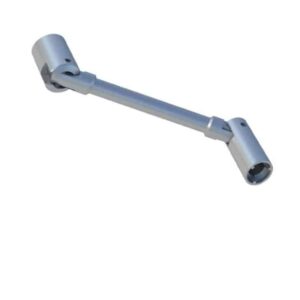
The couplers can’t be fitted or removed without the matching anti-tamper security spanner; it’s what makes the whole system tamper-proof. If this is your first set, add a spanner to your order. One spanner serves an entire site, so most teams only need one or two, regardless of how many couplers they run.
Most installers use two per join, one near the top and one near the bottom of where the panel tubes meet, to stop the panels twisting or being levered apart. For higher-security or longer-term lines, some sites add a third in the middle.
No, the spanner is bought separately. That’s deliberate: one spanner covers a whole site, so there’s no point in pricing one into every coupler. If you don’t already own the anti-tamper spanner, you’ll need one to fit or remove these.
Not without difficulty, which is the point. The bolt head is shaped and recessed so standard spanners and sockets can’t grip it. Only the matching anti-tamper spanner will turn it, so a misplaced spanner means a slow job. Keep one secured on site.
They’re designed around standard temporary fence tube, which most “Heras-type” panels share. If your panels use a non-standard tube diameter, check the measurement before ordering, as a coupler that’s too tight or too loose won’t clamp properly.
You can strip the thread or distort the clamp if you really lean on it. Tighten until the joint is firm and the panels don’t move, then stop, it’s a clamp, not a structural bolt, and snug is secure.
Usually yes. The hot-dip galvanising is built for exactly that, which is why they tend to outlast the panels themselves. Just give each one a quick check for a seized thread, a cracked clamp or heavy corrosion before it goes back out.

Reviews
There are no reviews yet.