
Please Call Before Collecting
£23.53 ex. VAT
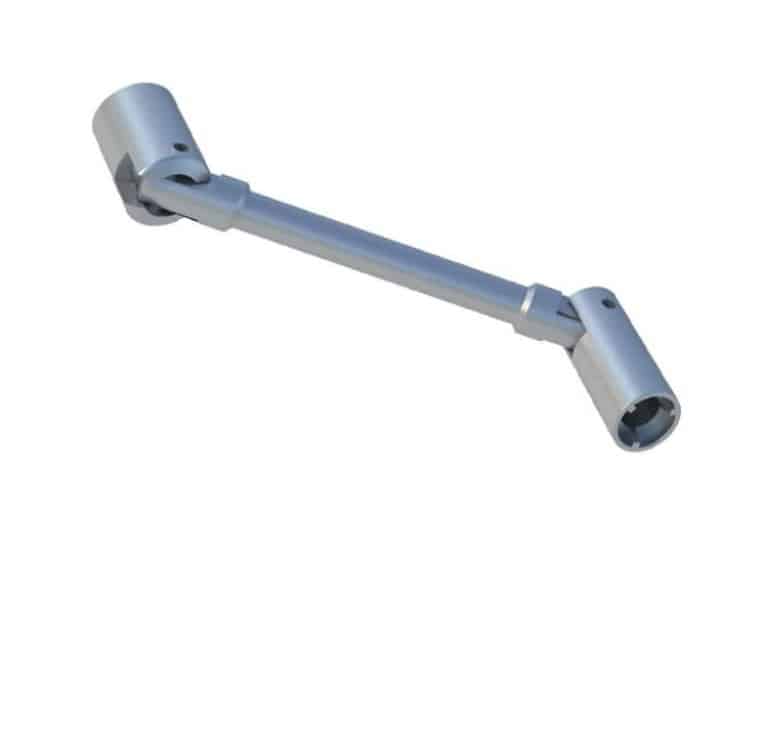
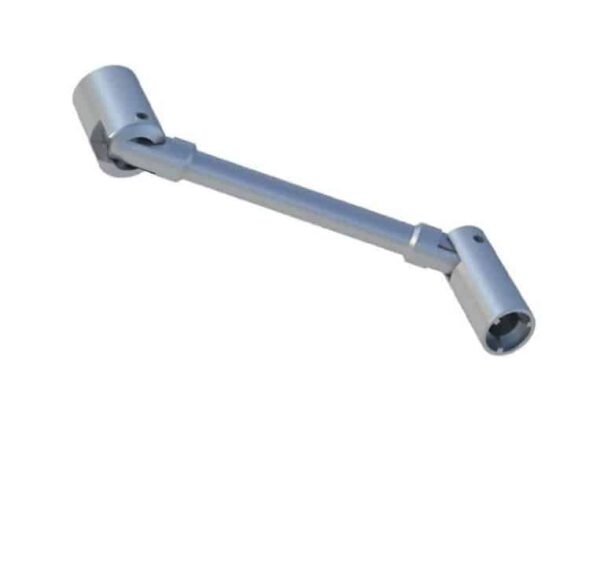
The Heras Fence Security Spanner is a double-ended tool for working with both anti-tamper and standard temporary fencing. One end has a special spiked bolt socket, the only fitting that tightens and releases security couplers, so panels can’t be removed with ordinary tools. The other end is a standard 7/16″ scaffold spanner for standard fence clips and steel scaffolding fittings. Made from hard chrome for strength and corrosion resistance. Length: 298mm. Weight: 0.52 kg. Compatible with most UK Heras-style couplers. In stock for fast delivery or yard collection.
The Heras fencing security spanner securely connects lockable anti-tamper couplers to metal Heras panels and construction site hoarding systems. This spanner is made from hard chrome and is the only tool compatible with the security couplers, as it features a special spiked bolt socket that can tighten and untighten the anti-tamper clips. This spanner is double-ended, and the opposite end has a standard 7/16″ scaffold spanner fixing, which can tighten the standard fencing clips and steel scaffolding fittings.
They are a lightweight spanner that measures approximately 298mm in length and 30mm in width, weighing approximately 0.52kg. The Heras fencing security spanners can be reused, as they are a reliable tool known for being robust and hard-wearing, and will last a long time if properly looked after and maintained.
Standard fence couplers are the weak point of any temporary perimeter. Anyone with an adjustable spanner can loosen them, lift a panel and walk straight onto site, which is exactly how panel theft, fly-tipping and out-of-hours access tend to happen. Anti-tamper couplers close that gap, but they only work if the couplers can’t be undone with everyday tools, and that’s the whole job of this spanner.
The head is shaped to seat onto the secure nut and nothing else. Pliers, mole grips and standard spanners slip or can’t engage, so once your panels are fitted with anti-tamper couplers and tightened up, they stay put until someone on your team comes back with this tool. It’s a small bit of kit that protects a lot of expensive fencing.
| Specification | Detail |
| Product | Heras Fence Security Spanner (anti-tamper coupler tool) |
| Use | Tightening and releasing anti-tamper couplers on Heras-style temporary fencing |
| Material | Hardened steel |
| Length | 298mm |
| Weight | Approx. 0.52 kg |
| Head profile | Fits standard anti-tamper coupler nut |
| Finish | Corrosion-resistant coating |
| Compatibility | Most UK anti-tamper / security couplers for Heras-type fencing |
| Sold | Individually |
Line the head up squarely over the coupler nut, then turn clockwise to tighten until the connection is firm, or anti-clockwise to release when you’re dismantling. Apply steady, even pressure rather than snatching at it, and give every connection a quick check before you leave site. Keep at least one spanner with each crew so panels can be secured and struck without holding up the job.
For a fully secure perimeter, fit your panels with anti-tamper couplers (this spanner is the matching tool for them), and add stabiliser pins and ballast feet on exposed or windy runs. If you’re upgrading an existing Heras setup, you’ll need enough couplers to replace the standard clips on the panels you want to lock down.
For most jobs, one per crew is enough, but it’s worth keeping a spare in the van or site office. If you lose the only spanner on site, you can’t strike the fencing, so the cost of a second tool is small insurance against a wasted trip.
It fits the standard recessed nut profile used on most UK anti-tamper couplers, so in most cases, yes. If you’re running mixed brands on one site, test it against a sample coupler first to confirm a clean fit before committing to a full order.
Yes, that’s the advantage of the double-ended design. One end carries the spiked bolt socket that fits the security couplers, while the other is a standard 7/16″ scaffold spanner. That second end tightens ordinary fencing clips and steel scaffolding fittings, so a single tool covers both your secured and standard connections, as well as general scaffold work.
No, and it would defeat the point. The security relies on the tool being kept by authorised staff. Leaving it on or near the fence line hands anyone the means to remove your panels.
The head will gradually wear with heavy use. Once it starts to round off and no longer seats firmly on the nut, replace it, a worn spanner can slip and damage the coupler. For the cost of one tool versus a stolen panel, it’s worth swapping promptly.
Yes, one tool does both. Turn clockwise to secure a connection and anti-clockwise to release it for dismantling, so there’s no separate key for fitting and striking. That keeps your kit simple; one spanner per crew covers the whole job.
Yes. There’s no technique to learn beyond seating the head squarely on the nut and turning it, so any competent site operative can fit or strike fencing with it. The only point worth briefing the team on is keeping the spanner with authorised staff rather than leaving it on site, since that’s what preserves the security.

Reviews
There are no reviews yet.