
Please Call Before Collecting
£10.50 – £15.95Price range: £10.50 through £15.95 ex. VAT
Please use the drop-down menu below to purchase either the standard 4-tonne or 6-tonne scaffold jacks or the 4-tonne swivel option.
Collections are available Monday through Friday, subject to stock availability. We can also deliver nationwide, subject to minimum quantity orders and the distance you are from our yard in Aldingbourne, West Sussex.
Need your order fast? We occasionally offer next-day delivery on select items for orders placed by 11:30 a.m. on weekdays. This service depends on stock, and an extra delivery charge will apply. We don’t deliver on weekends.
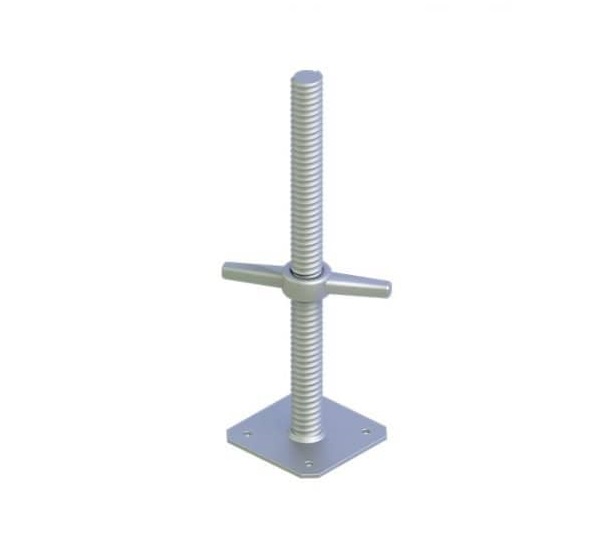
You can purchase either standard base jacks or swivel base jacks from us, which are essential components for ensuring stability, level adjustment, and safety in scaffolding systems across various work environments. Available in both 4-tonne and 6-tonne capacities, these jacks feature a robust construction, reliable load ratings, and compatibility with leading scaffold systems, including Ringlock, Kwikstage, Cuplok, and Haki. While standard scaffold jacks provide steadfast, vertical support on uneven ground, swivel base jacks offer the added versatility of a 360-degree adjustable base, making them the ideal solution for angled and complex lifting scenarios. Together, they form the foundation for secure, adaptable, and precisely levelled scaffolds on construction, demolition, and civil engineering projects.
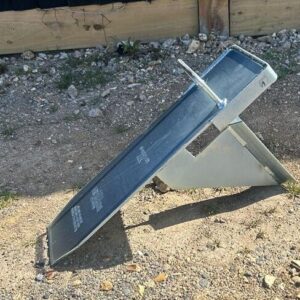
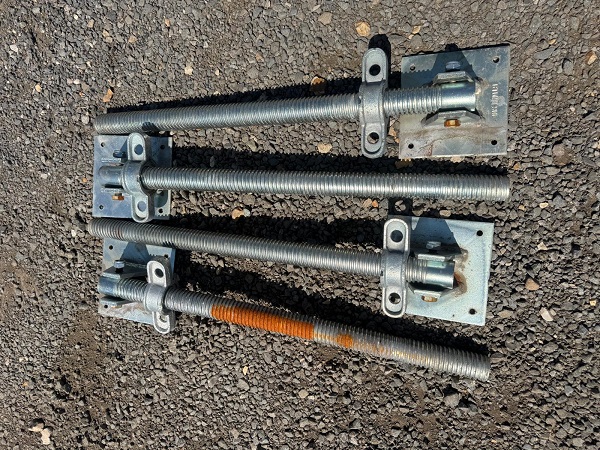
Standard scaffold jacks provide solid vertical support and are fixed in position, making them ideal for levelling scaffolds on uneven ground. Swivel scaffold jacks, in contrast, have a 360-degree adjustable base, allowing them to be positioned at various angles, making them suitable for angled or complex surfaces.
Both the standard and swivel jacks are available in capacities of 4 tonnes and 6 tonnes, providing robust support for scaffolding systems.
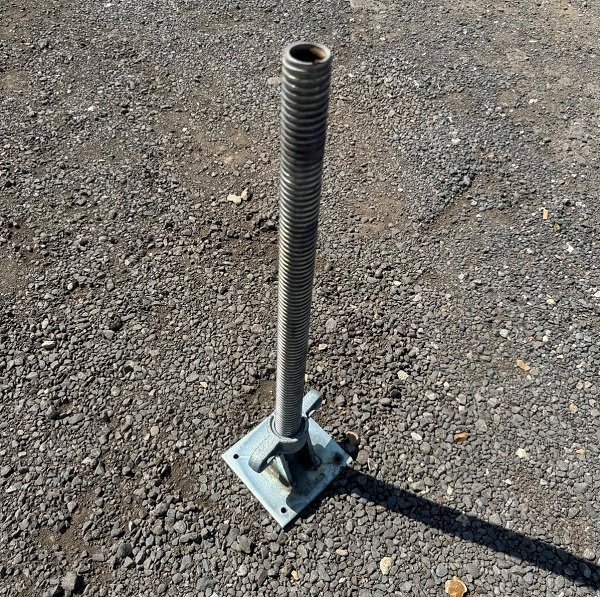
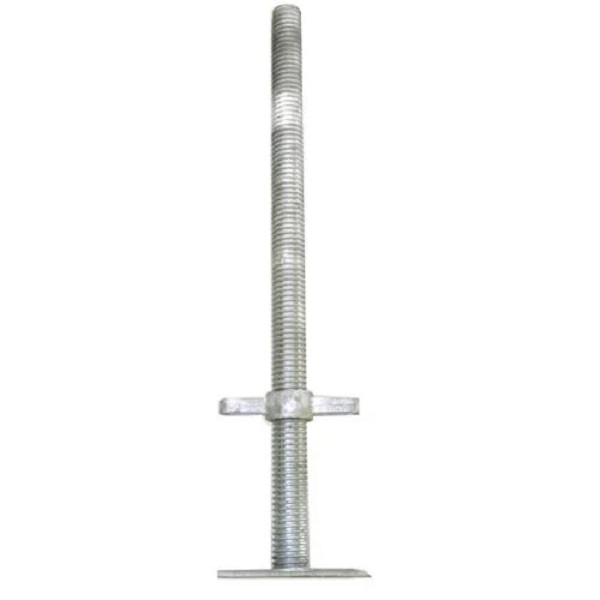
Scaffold jacks typically feature a 150mm x 150mm base plate (6mm thick), a 4TPI Acme-threaded hollow bar that is 650mm tall, and an overall diameter of 38mm. Both the swivel and standard jacks are constructed from galvanised steel with a zinc coating for durability and weigh approximately 4.5-4.7kg.
The maximum height of a scaffold screw jack from the base is 18 inches, while for mobile scaffolds, it should not exceed 12 inches.
They are tested to BS 4360/43A, BS 1139, and EN 74 standards, ensuring quality and safety.
They are made from galvanised steel and feature a zinc coating for enhanced longevity.
These supports are commonly used across various sectors, primarily in construction and demolition. Their applications include:
Installation involves placing the jack on the ground, rotating the wingnut to achieve the desired height, and positioning the vertical tube over the jack so the pole rests on the nut. The double-wing nut enables easy and precise adjustment.
Ensure the jack is not overloaded, keep lifted loads as low as possible, never screw past the maximum point, and inspect all components for damage before use.
The threaded tubing of a standard base jack is fixed upright to the base plate, while on a swivel jack, the thread can be positioned at various angles via a swivel base plate.
A swivel base jack is also called a rocker base jack, swivel jack scaffold, or swivel base screw jack.
Standard base jacks are commonly called base jacks or scaffold screw jacks.
The holes in the base plates are designed to allow the plates to be securely fixed to the ground or supporting surface. By anchoring the base plate, stability is increased, and the risk of shifting or movement under load is reduced, especially on uneven or sloped terrain. This added security is essential for maintaining safety on construction and scaffolding sites.
The 4-tonne and 6-tonne scaffold jacks have a safe working load, meaning each jack can safely support up to its rated weight, including the scaffold, workers, tools, and materials.
| Type of scaffold jack | Standard scaffold jack, Swivel scaffold jack |
|---|---|
| Safe working load | 4 tonne, 6 tonne |

Reviews
There are no reviews yet.