
Please Call Before Collecting
£27.98 – £48.35Price range: £27.98 through £48.35 ex. VAT
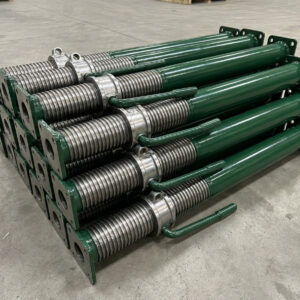
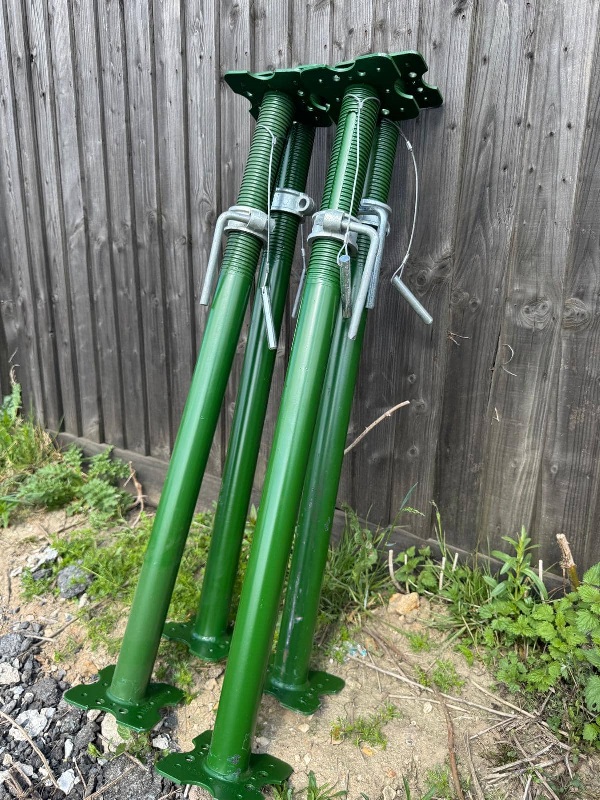
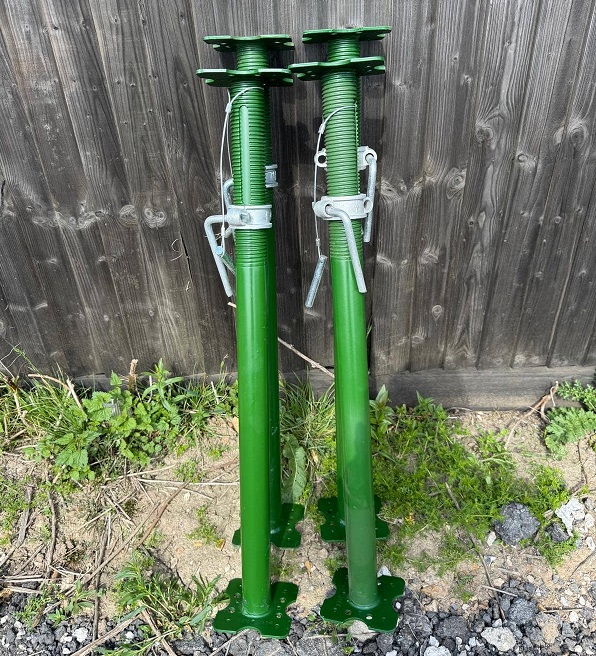
We offer a wide range of adjustable metal acrow props for purchase in the following heights: Size 0 – 1.04m to 1.83m, Size 1 – 1.75m to 3.13m, Size 2 – 1.98m to 3.35m, Size 3 – 2.59m to 3.96m and Size 4 – 3.2m to 4.87m. Acrows are primarily used to temporarily shore or prop up ceilings, RSJs, steel beams, floors, formwork, and load-bearing walls during construction projects, building jobs, and repair work.
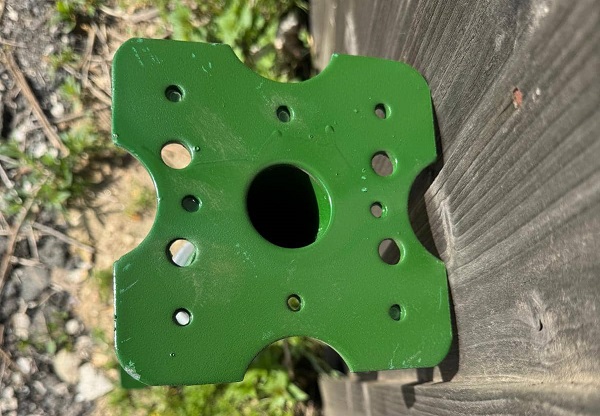
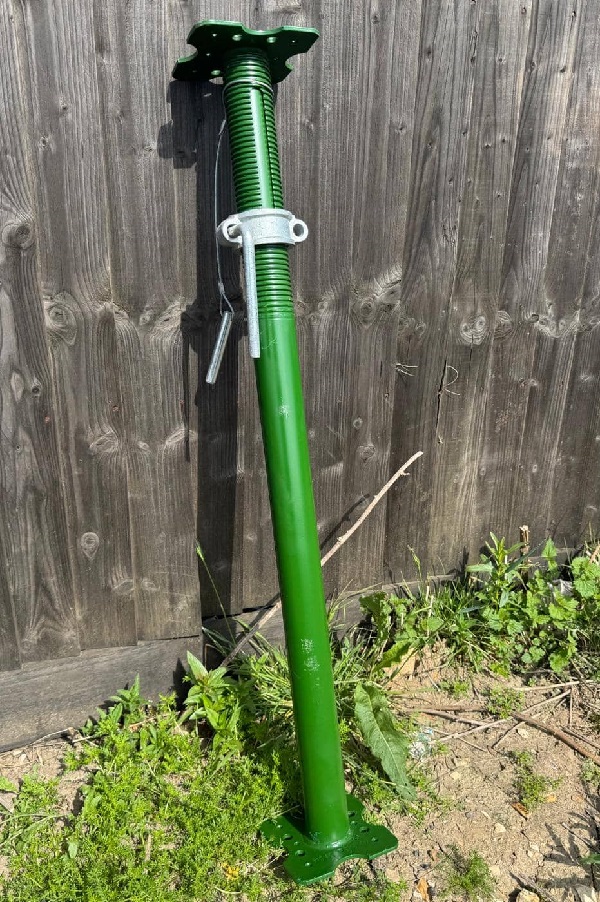
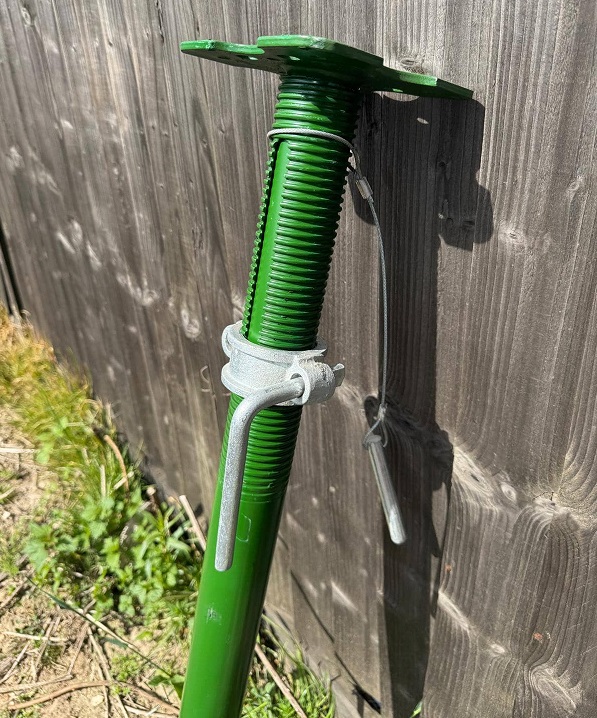
Our high-quality, durable acrows are powder-coated to protect the steel from corrosion and wear. These props consist of an inner and outer tube, plus head and base plates. There is also an adjustable height screw with a prop pin to secure the acrow once it has been extended. They have been manufactured to the British standards BS4074:1982 and BS5507-3:1982.
| Project Type | Common Acrow Prop Sizes | Typical Use Case | Why Props Are Essential |
| Beam & Lintel Installation | Sizes 1–3 | Supporting RSJs, steel beams, or lintels during removal/installation | Prevents collapse of openings and walls |
| Floor & Ceiling Shoring | Sizes 0–2 | Temporary support of joists, concrete slabs, or ceilings | Allows safe removal of load-bearing elements |
| Load-Bearing Wall Removal | Sizes 2–4 | Propping masonry or stud walls before demolition | Maintains structural stability during work |
| Formwork & Concrete Pouring | Sizes 1–3 | Supporting formwork panels or soffits | Ensures accurate levels and safe curing |
| Basement & Underpinning Work | Sizes 3–4 | Deep excavations or foundation strengthening | Provides tall, high-capacity vertical support |
| Window/Door Opening Creation | Sizes 0–2 | Temporary propping of openings in brickwork | Keeps walls stable while frames are fitted |
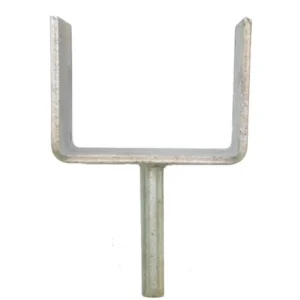
Enhance wall and lintel support during masonry removal or openings: Attach our Strongboy prop head wall supports to standard Acrow props for secure blade insertion into brickwork without penetrating both skins.
Provide horizontal bracing in excavations and trenches: Pair Acrow props with our adjustable trench struts (Sizes 0–3) for safe shoring of trench walls, foundations, or utility works alongside vertical propping.
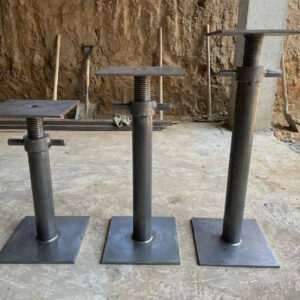
Stabilise foundations during subsidence or underpinning: Use our heavy-duty underpinning jacks (6 tonne SWL, Sizes 1–3) for precise jacking and temporary/permanent support in building renovations or foundation strengthening.
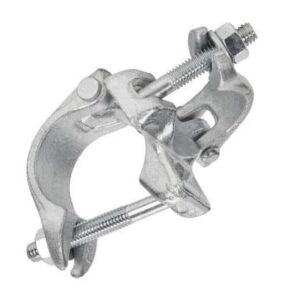
Connect props to scaffold tubes for added bracing or stability: Secure your setup with our prop-to-tube double couplers – drop-forged fittings for 90° connections between Acrow props and 48.3mm tubes in temporary works or shoring systems.
Here are the approximate measurements listed below:
Whatever area you are trying to support, an acrow is placed vertically to hold up load-bearing objects; this prevents collapsing, so repairs and building works can continue.
Yes, an acrow prop can be known by quite a few different names in the trade. For example, they are often called shore props, steel props, jacks, acrows, and post shores.
An inventor named William de Vigier, born in Switzerland, invented the first acrow props. He came to England and had a workshop in Bow in the East End making acrows.
Yes, acrows are a handy and invaluable tool for any construction project where heavy loads require support. They are a great piece of kit for removing support beams. If any part of your work involves supporting loads, then using acrow prop is advisable.
As you can see on this page, we offer 4 sizes, each with an adjustable height.
The minimum height from which a number 0 acrow will start is 1.04m (closed).
The maximum height our largest number 4 acrow would reach is 4.87m.
Take a look at our dropdown menu above to ensure you choose the right size for your project.
Below is the approximate weight of each support prop in kilograms:
As a rule, it is advisable to use a single acrow every metre, more so if you are supporting brickwork and masonry. Depending on the type of project, you may want to use more, but as a general guide, one per 1 metre, evenly spaced, is usually sufficient. However, it is advisable to consult a structural engineer to ensure safety.
Load Type | Recommended Spacing (m) | Notes |
Brickwork/Masonry Walls | 1.0 | One prop per meter; increase for heavier loads |
Timber Beams/RSJs | 0.9–1.2 | Adjust based on beam span; use needles for distribution |
Concrete Slabs/Formwork | 1.2–1.5 | Consult engineer for slab thickness> 150 mm |
Light Repairs (e.g., Ceilings) | 1.5–2.0 | Fewer props for non-load-bearing scenarios |
Note: These are general guidelines; always factor in wind, vibrations, and total load.
To fix the acrow props in place, you should follow the steps below:
Step 1: Lift the inner tube out of the outer tube to the required height,
Step 2: Locate the pin and insert it into the prop holes, which will go through the outer and inner tubes and lock into position.
Step 3: Twist the collar to adjust and tighten.
| Scenario | Recommended Prop Size Range | Key Safety Tip |
| Removing a load-bearing wall | 2–4 | Use in pairs with strong needles; an engineer’s design is essential |
| Supporting a new lintel | 1–3 | Ensure props are plumb and level before load transfer |
| Propping during underpinning | 3–4 | Check for settlement regularly |
| Temporary roof support | 1–3 | Use with strong head plates and base plates |
| Formwork for concrete pour | 1–3 | Space evenly to prevent deflection |
| Typical Load Type | Approximate Safe Spacing (centres) | Recommended Prop Size | Notes from Industry Practice |
| Light floors/ceilings | 1.0–1.5 m | Size 0–2 | For joists or plasterboard |
| Masonry walls/brickwork | 0.8–1.2 m | Size 2–4 | Higher loads; closer spacing for safety |
| Steel beams / RSJs | 1.0–2.0 m | Size 1–3 | Depends on beam weight; consult an engineer |
| Concrete slabs/formwork | 0.9–1.5 m | Size 1–3 | Even distribution critical |
| Heavy loads (e.g., underpinning) | 0.6–1.0 m | Size 3–4 | High-capacity props with professional design |
Loads vary by size and height, e.g., Size 0 can support up to 31 kN at 1.05m, dropping to 28.4 kN at 1.83m. Refer to our load capacity table for details. Note that off-centre loading significantly reduces capacity.
Prop Height (m) | Size 0 (kN) | Size 1 (kN) | Size 2 (kN) | Size 3 (kN) | Size 4 (kN) |
1.05 | 31 | – | – | – | – |
1.52 | 31 | – | – | – | – |
1.83 | 28.4 | 31 | – | – | – |
1.98 | – | 31 | 31 | – | – |
2.44 | – | 29 | 31 | – | – |
2.59 | – | 23 | 28.9 | 31 | – |
2.74 | – | 21 | 26 | 31 | – |
3.05 | – | 20 | 24 | 32 | 28.9 |
3.35 | – | 16 | 19 | 28.4 | 26 |
3.96 | – | – | – | 15 | 21 |
4.27 | – | – | – | – | 17 |
4.57 | – | – | – | – | 14 |
4.88 | – | – | – | – | 11 |
Note: Loads assume concentric loading and compliance with BS 5975 standards. Always consult a structural engineer for site-specific calculations, as eccentric loading or angles can reduce capacities by up to 90%.
Size | Min Height (m) | Max Height (m) | Weight (kg) | Outer Tube Diameter (mm) | Inner Tube Diameter (mm) | Typical Applications |
0 | 1.04 | 1.83 | 11.3 | 60.3 | 48.3 | Low ceilings, minor repairs |
1 | 1.75 | 3.13 | 16.3 | 60.3 | 48.3 | General flooring, beam support |
2 | 1.98 | 3.35 | 17.5 | 60.3 | 48.3 | Mid-height walls, formwork |
3 | 2.59 | 3.96 | 20.2 | 60.3 | 48.3 | Higher ceilings, load-bearing walls |
4 | 3.20 | 4.87 | 23.8 | 60.3 | 48.3 | Tall structures, heavy shoring |
As a rule of thumb, use one pair of props every 900mm (3 feet) for walls or beams. For larger areas, such as slabs, divide the total load by the prop’s safe working capacity at the required height, then space accordingly. Always involve a structural engineer for precise calculations.
No, they are designed for vertical support only. Horizontal use can lead to failure and is not recommended or compliant with safety standards.
For temporary supports, like during mortar curing, 24–48 hours is typical. For longer-term projects, inspect weekly and ensure they remain stable. Do not exceed 28 days without professional reassessment.
Clean after use, lubricate the collar with WD-40 if stiff, and inspect for dents, rust, or bent pins. Store upright in a dry place. Powder-coated finishes help resist corrosion.
Yes, with their powder-coated finish for weather resistance. However, protect from extreme elements and ensure stable ground support to prevent slipping.
Common add-ons include strongboys for wall insertions, timber needles for load distribution, or base plates for uneven surfaces. These can increase versatility but may affect load capacities.
Before each use and at least weekly during projects, check for damage, ensure pins are secure, and verify plumb alignment (no more than 1.5° off vertical).
Overloading can cause buckling, collapse, or structural failure. Always stay within safe working loads and avoid eccentric positioning to prevent accidents.
| Size | Size 0 – 1.04m to 1.83m, Size 1 – 1.75m to 3.13m, Size 2 – 1.98m to 3.35m, Size 3 – 2.59m to 3.96m, Size 4 – 3.2m to 4.87m |
|---|
Reviews
There are no reviews yet.