
Please Call Before Collecting
£12.25 – £17.75Price range: £12.25 through £17.75 ex. VAT
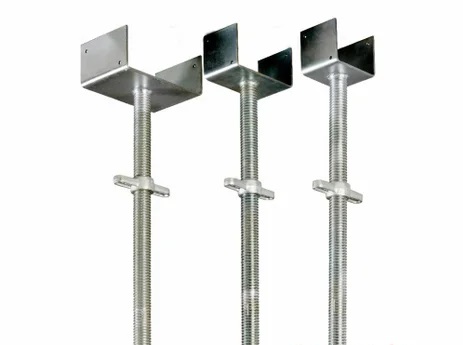
The Adjustable U-Head with Spigot provides secure, adaptable support for timber beams on top of adjustable steel Acrow props, ideal for precise levelling in formwork, shoring, and temporary propping.
We supply this robust component as part of our commitment to safe, high-quality scaffolding solutions. Manufactured from high-grade steel and compliant with BS1139 and EN74 standards, the Adjustable U-Head with Spigot combines ease of use with exceptional strength, helping contractors achieve stable, accurately positioned support every time, whether on small domestic jobs or large commercial sites.
Our Adjustable U-Head with Spigot stands out for its versatility and reliability on the job site. Here are some key advantages:
By choosing this accessory, you’re investing in equipment that prioritises efficiency, safety, and adaptability, drawing from our extensive experience in supplying scaffolding solutions across West Sussex and beyond.
The Adjustable U-Head with Spigot is engineered for strength and precision. Below are the core technical details:
Available in multiple sizes to accommodate a range of beam widths, ensuring a perfect fit for your project.
Size Designation | Beam Clearance (mm) | U-Head Plate Dimensions (Width x Height) | Threaded Spigot Length |
4″ (100mm) | 120 | 150mm x 100mm | 500mm |
6″ (150mm) | 170 | 150mm x 100mm | 500mm |
8″ (200mm) | 220 | 150mm x 100mm | 500mm |
This table outlines the dimensional variations, allowing you to select the right size based on your beam requirements.
This accessory is primarily used to provide adjustable support for timber beams on top of Acrow props or scaffolding standards. It allows for fine-tuning of height, making it suitable for applications such as formwork support, shoring, and joist installations.
Yes, it’s designed to work with standard Acrow props as well as modular systems such as Kwikstage and Cuplock. The spigot inserts directly into the prop or standard for a secure fit.
Under concentric loading, it has a safe working load of 4 tonnes. Always ensure loads are applied centrally and consult a structural engineer for site-specific advice.
The 500mm threaded spigot comes with a wing nut for easy adjustment. Simply insert the spigot into the prop, position the U-head at the desired height, and tighten the nut to secure the lock.
Regularly inspect for signs of damage, corrosion, or thread wear. Clean after use and store in a dry environment. Follow BS1139 and EN74 guidelines to maintain safety and performance.
It’s optimised for concentric loading. For any offset applications, we recommend a professional engineering assessment to ensure safety.
Adjustable U-heads have a long threaded spigot (500mm) for accurate height adjustment using a wing nut, making them ideal for levelling beams or adjusting for uneven surfaces. Fixed U-heads feature a short, solid spigot (75mm) for easy, non-adjustable support. Use adjustable heads when precise levelling is needed; choose fixed heads for quick, set-height support.
The size refers to the nominal beam clearance/gap that the U-head can accommodate:
No, it’s designed and rated for concentric (central) loading only to achieve the full 4-tonne safe working load. Off-centre or eccentric loads reduce capacity significantly and increase tipping or instability risks. For any non-central applications, always consult a qualified structural engineer or temporary works designer to assess and approve safe load limits.
Yes, the 500mm ACME-threaded spigot uses a simple wing nut (often with extended handles for grip) for hand-tightening and adjustment without needing special tools. It provides smooth, precise height changes. Always ensure the wing nut is fully tightened and secure before loading, and avoid over-tightening to prevent thread damage.
Inspect for:
Yes, weights vary slightly: 4” ≈4.7kg, 6” ≈5.75kg, 8” ≈6.8kg. The difference is minor for manual handling but noticeable when carrying multiples on site. All remain lightweight and portable compared to full props or standards.
| Size | 100mm (4"), 150mm (6"), 200mm (8") |
|---|
Reviews
There are no reviews yet.