
Please Call Before Collecting
There’s a quiet worry we hear a lot, even if people don’t always say it out loud. It usually sounds something like: “Will they even bother with my order? I need one.”
Maybe you’re a builder who needs a single item to finish off a job that’s already running late. Maybe you’re a homeowner tackling a weekend project, and all you need is one part, one fitting, one specific piece, nothing more, nothing less. Somewhere along the way, a lot of people have picked up the idea that suppliers like us are only interested in big commercial orders, and that anything smaller is a bit of a nuisance to deal with. An inconvenience. Something to be tolerated rather than welcomed.
We want to put that worry to rest, properly and plainly: that’s not how we work, and it never has been.
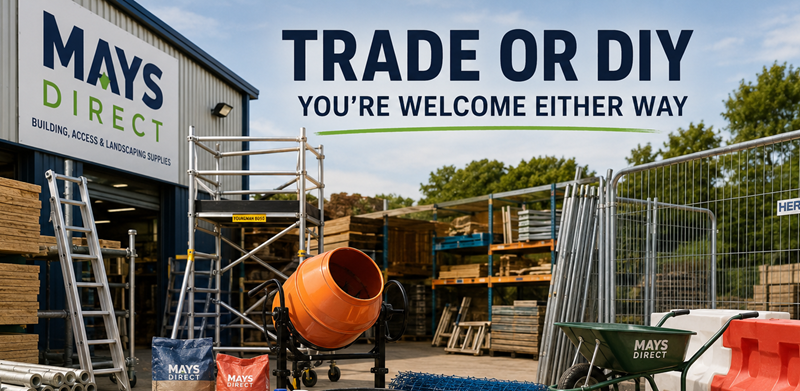
There’s no minimum order here. Not a soft one, not a “we’d prefer it if,” not a “technically yes, but realistically no.” If you need one item, you can order one item, and it will be picked, packed, and sent out with the same care as an order for a hundred.
We know that sounds like the kind of line a lot of businesses say and don’t really mean. So it’s worth spelling out what it actually looks like in practice. It means you won’t be quietly nudged toward buying more than you need just to make an order “worth processing.” It means there’s no cart threshold you have to hit before checkout even lets you through. It means a single item isn’t treated as an exception to the rule; it is the rule, just as much as any larger order is.
Trade professionals and DIYers aren’t really so different from where we’re standing. You’ve both got a job to finish, a standard you’re trying to hit, and very little patience for being made to feel like your order isn’t worth the effort. The size of the job in front of you doesn’t change any of that.
If anything, we’d argue the stakes can be higher on a smaller order, not lower. A tradesperson ordering in bulk for a big commercial job usually has some flexibility, a bit of surplus stock, a supplier relationship, and a bit of room to problem-solve if something isn’t quite right. A DIYer who needs exactly one part doesn’t have that cushion. If that one item is wrong, delayed, or treated as an afterthought, the whole project stalls. There’s no plan B sitting in a van.
We also think there’s something a little backwards about the idea that smaller orders matter less. A single replacement part might be the last piece standing between you and a finished project you’ve been chipping away at for weeks. A one-off item might be exactly what gets a job over the line, on time, on budget. That matters. It matters just as much as a bulk order does, arguably more, because there’s often less room for error when you only need the one.
We’re not pretending trade buyers and DIY buyers are identical, because they’re not. A tradesperson working through a job list has different needs, different timelines, and a different level of familiarity with the products than someone tackling their first home project. We get that, and we try to make things easy to find and understand regardless of which camp you fall into.
But underneath those differences, the standard we hold ourselves to doesn’t change. Product quality doesn’t change. Service doesn’t change. The attitude you get when you place an order, whether it’s for one item or a full pallet, doesn’t change either.
If you’re a tradesperson, order exactly what the job needs. Don’t pad your cart to hit some invisible threshold that doesn’t actually exist. If you’re doing it yourself, order the single item you came for, and don’t feel like you need to justify it or apologise for it.
Either way, you’ll get the same product quality, the same straightforward service, and the same “we’re glad you’re here” attitude from us, every single time. Big order or small, trade or DIY, you’re genuinely welcome either way. That’s not a slogan. It’s just how we’d want to be treated ourselves.